

Number Of Protons In Radium
How to Detect the Number of Protons, Neutrons, and Electrons. Stride by Step Explanation with Examples
In this postal service, nosotros'll exist going over how to make up one's mind the number of protons, neutrons, and electrons in an atom or ion.
We'll showtime outset by discussing what each of the components in the nuclide note ways. And then we'll go through ii examples together.
The Nuclide Notation
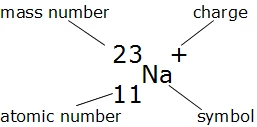
The letter of the alphabet(s) in the eye is the symbol of the element.
The number on the bottom left corner is the diminutive number, which tells you the number of protons.
The number on the upper left corner is the mass number, which is equal to the neutrons and protons added together.
Lastly, the accuse is on the upper correct corner. If there isn't any number or signs, so it means that atom has no charge and is neutral.
Rules to Finding Number of Protons, Neutrons, and Electrons
# of protons = atomic number
# of neutrons = mass number – atomic number
# of electrons = diminutive number – accuse
That's it!
Examples
Neat, lets apply the rules to some examples.

# of protons = 17
# of neutrons = 37 – 17 = 20
# of electrons = 17 – 0 = 17
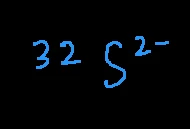
# of protons = xvi (the atomic number is non given, but tin be found on the periodic tabular array)
# of neutrons = 32 – sixteen = 16
# of electrons = 16 – (-2) = 18
Additional Practice
Try these on your own and check the respond beneath
- 78Se2-
- 391000+
ANSWERS
- 34 protons, 44 neutrons, 36 electron
- xix protons, xx neutrons, eighteen electron
Additional Resource
More exercise bug
Answers to exercise problems
If you have any questions, leave a comment below.

Number Of Protons In Radium,
Source: https://conquerchemistry.com/2017/07/27/number-of-protons-neutrons-electrons/
Posted by: shawneeks1960.blogspot.com
0 Response to "Number Of Protons In Radium"
Post a Comment